Once the cricket finally started, Ishan Kishan’s belligerent hitting delighted the Indian-heavy crowd – which, it should be said, was not at capacity. Usman Tariq’s curious action, his pause akin to Jorginho’s jump when taking a penalty, dominated pre-match chat. He failed to remain the protagonist of the contest itself, albeit he did cheekily bow towards Suryakumar upon dismissing the man who was filmed mimicking his ways during Indian net sessions.
At the mid-innings break, some dared to think we could have a chase on our hands with Pakistan needing 176. India’s dominant powerplay, taking four wickets and conceding just 39 runs, put a swift end to such notions.
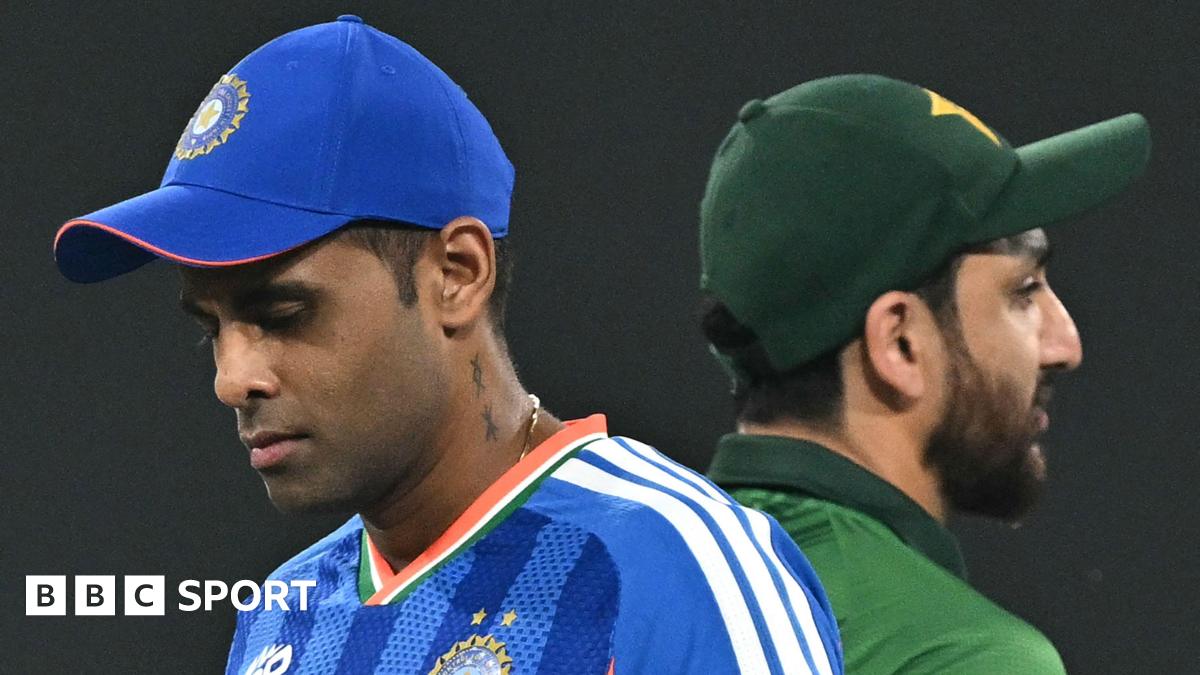
The scoreline in this match-up at T20 World Cups now reads 8-1 in favour of India. This rivalry has become political, rather than a sporting one. As tedious as the interference is, it offers more to discuss than one side consistently outclassing the other.
As if aware of this, in a lull during Pakistan’s inevitable defeat, the ICC replayed the cordial exchange between Wasim and Rohit prior to the match. Aren’t we all getting along just fine? Just not to the extent that players shook hands once India wrapped up their shellacking. That sign of respect continues to feel some way off.
“We see them as a team – we are not thinking about this as a rivalry or whatever,” said India’s Axar Patel.
“We are playing against one team and we are focusing on cricket. Whenever I’m playing, I’m not thinking about whatever, I treat it as one match and opponent.”
After the final wicket, Hardik Pandya and Shivam Dube did not feel they had hit their desired workloads. The former bowled three overs in the match, the latter was not required. Out came bowling coach Morne Morkel to catch extra work with his baseball mitt. Opposition resoundingly dealt with yet more reps needed.
An apt reflection, not that it was required, of this contest’s non-existent relationship with the sort of jeopardy required to make us all forget the politics.
Source link