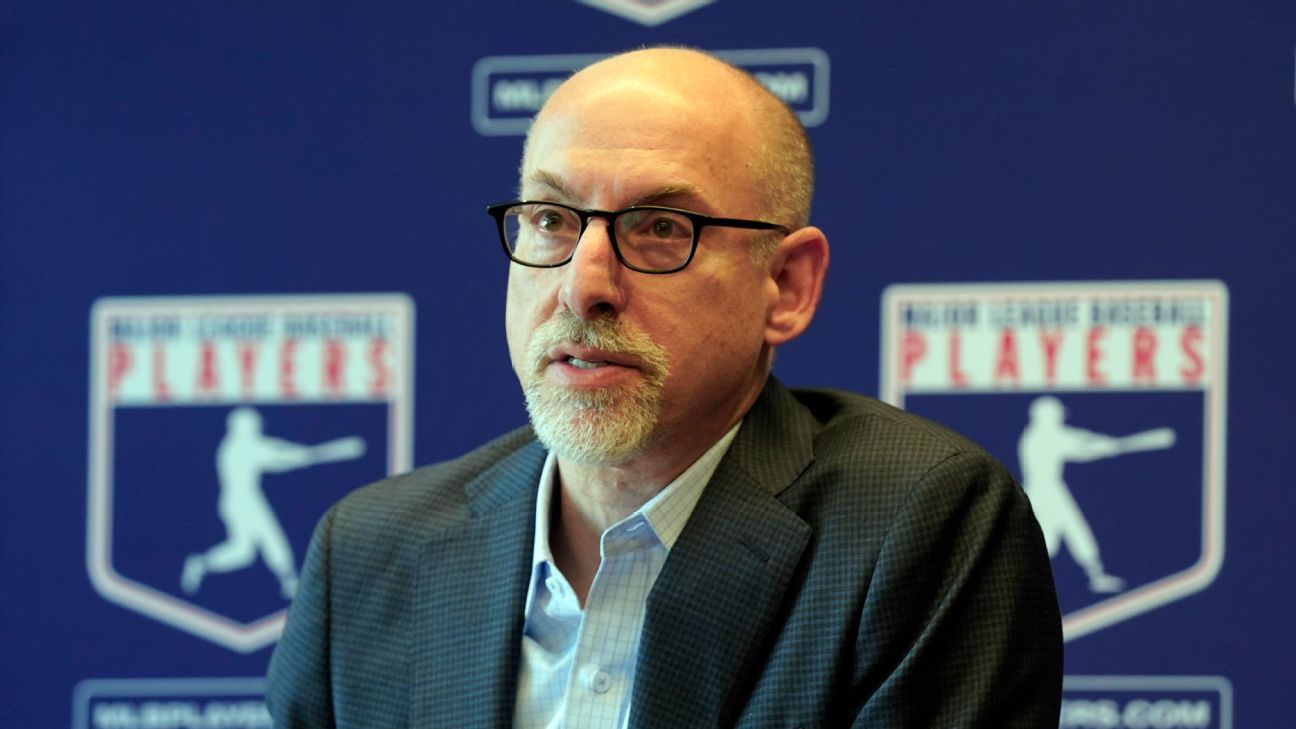
The Major League Baseball Players Association unanimously elected Bruce Meyer as its new executive director Wednesday night, replacing Tony Clark the day after he resigned amid scandal less than a year before the expiration of MLB’s collective bargaining agreement.
Meyer, previously the union’s deputy executive director, ascends to the top spot on an interim basis at a crucial moment for the MLBPA. With owners pushing for a salary cap and prepared to lock out the players Dec. 1 should they not reach a new deal, players are bracing for an extended work stoppage as they attempt to stave off the league’s efforts.
The 72 players on the union’s executive board — 38 major leaguers, 34 minor leaguers — also elevated Matt Nussbaum to interim deputy executive director. While Nussbaum, previously the union’s general counsel, was seen by some players as a candidate for the top job, the group coalesced around Meyer one day after declining to take a vote on a new executive director.
Hired in 2018 after a much-criticized labor deal negotiated the year before, Meyer served as the lead negotiator for the union during the COVID-19 pandemic and helped broker the 2022 labor deal that followed a 99-day lockout. A longtime lawyer who previously worked for the NHL, NBA and NFL players’ unions, Meyer becomes the MLBPA’s sixth executive director.
Clark resigned Tuesday following an internal investigation that revealed an inappropriate relationship with his sister-in-law, whom the union had hired in 2023. A federal investigation into the MLBPA concerning questions about its finances and governance prompted the union to hire an independent lawyer, whose inquiry exposed the inappropriate relationship.
Player leaders had been girding for Clark’s departure, though the timing of it — on the day he was supposed to address the Cleveland Guardians on the first stop of the union’s tour of all 30 camps — left them scrambling. By Wednesday morning, prior to their election, Meyer and Nussbaum were leading a meeting with the Kansas City Royals and reiterating the union’s firm anti-cap stance.
“Our position and the historic position of this union for decades on the salary cap is well-known,” Meyer said. “It’s the ultimate restriction. It is something that owners in all the sports have wanted more than anything — and baseball in particular. There’s a reason for that: because it’s good for them and not good for players.”
Though Meyer’s willingness to fight the league on issues large and small earned him admirers among the players, a group of them pushed for his removal as deputy executive director two years ago. Clark whipped support to save Meyer’s job, and he spent the time since preparing for what’s expected to be the largest labor battle in baseball since a player strike in 1994 canceled the World Series.
The league pushed for a salary cap then, too, and has pointed to the payroll disparity in MLB as the reason to enact one, though franchise values that lag behind the other major men’s professional sports are seen by the players as the true impetus. Negotiations on a new deal are expected to start in the coming months, pick up after the All-Star break and potentially extend well beyond the current deal’s expiration.
“We have a duty to the players and otherwise to listen to anything the league offers,” Meyer said. “We will evaluate, analyze anything that’s offered.
“A lockout is all but guaranteed at the end of the agreement,” he added. “The league has pretty much said that. Their strategy in bargaining has always been to put as much pressure on players as they can to try and create divisions and cracks among our membership. It’s never worked. I don’t think it ever will work.”
ESPN’s Jesse Rogers contributed to this report.
Source link