-

Tom Hamilton
Multiple Authors
Slumps and surprises, cards and chaos, round two of the Six Nations had it all, with France the last team standing with hopes of a Grand Slam.
Wins for Les Bleus, Ireland and Scotland saw the table move about and pressure shift from one coach to the next.
– Six Nations power rankings: England drop, but by how much?
– England can’t dwell on Scotland defeat as Ireland await
Here are the biggest talking points ahead of round three.

Frustrated England must unleash on Ireland
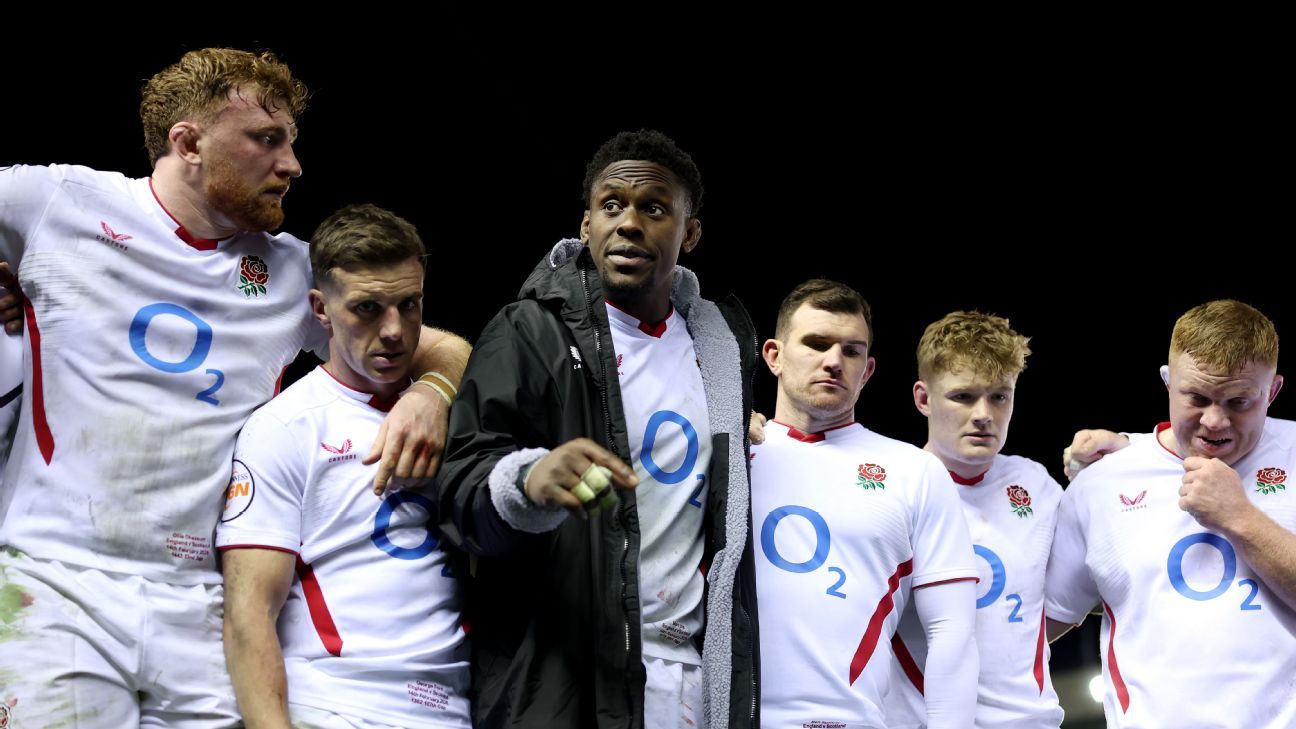
So are we back to square one, again? Or was the Scotland defeat an uncharacteristic blip in England’s continued evolution?
Emotionally, England didn’t look right on Saturday. Scotland got themselves worked up to an emotional level far superior to England. It led them to carry extra ballast into collisions, jump that inch higher in the air to pluck the ball from contestable kicks, and to make the intelligent calls at the right time. Scotland’s plan of going wide wasn’t new — it’s what they’ve done repeatedly against England, targeting that 15-metre channel.
Hamilton: Outstanding Scotland prove why Calcutta Cup defies sense and logic
But still, England couldn’t stop them leaving them with yet another wounding visit north of the border to their name, added.
We’re facing yet another key week in the Steve Borthwick tenure.
England were bubbling so nicely – 12-straight wins and playing with attacking invention and intention we have seldom seen from them. Despite the missing personnel, they blitzed past Wales and fancied their chances to retain the Calcutta Cup and end their Murrayfield hoodoo. Instead, they’re licking their wounds with Ireland to come.
They need to re-find the precision which we saw in the autumn. England can defeat Ireland next weekend, but they need to find an emotional headspace to deliver on their potential. They need to be back contesting the breakdown with greater ferocity, chasing loose kicks back with more urgency and attack with more vim and vigour.
Only then will we know if Scotland was a blip, or a setback.
Welsh fans’ apathy should terrify WRU
It was another defeat for Wales where the opposition has passed the half-century mark.
It’s the fourth time that’s happened in Cardiff in as many matches, and France left tries out there in their 54-12 win. Les Bleus stretched Wales’ narrow defence, the mesmeric Matthieu Jalibert picking out players on the flanks to dart in, but Wales were also responsible for their own downfall as they shipped eight tries.
France’s fourth on half-time was far too simple – Adam Beard’s misjudged attempt at a kick, and France pounced, Jalibert running in. It was the stuff you’d see at an amateur rugby match on your nearest park at the weekend.
Top of Wales head coach Steve Tandy’s to-do list must be to go back to what he does best: defence. The attack can come later. Wales’ defence is built on sand, they must build sturdy foundations or else this tally of half-centuries and resounding beatings will just continue.
The admirable captain Dewi Lake said Wales are building, but while their losing rate will give the WRU cause for concern, the apathy in the stands is even more alarming.
The match with France drew Wales’ lowest attendance in the Six Nations — just 57,744 — edging out the previous record low of 58,349 against Italy in 2002.
That’s a real sign of where things are in Wales. It wasn’t so long ago that you couldn’t find a ticket for love nor money to watch Wales — the Principality would be full well before kick-off, generating the greatest cauldron in world rugby. But no longer.
The Welsh public are growing tired of repeated failure, bungling administrators against the backdrop of the Ospreys edging closer to extinction. It’s going to take a lot to get them back on side.
The Ireland fly-half debate isn’t going away
The cheer which greeted Jack Crowley’s introduction on the 56th minute was one of the louder roars heard in Dublin on Saturday. Again Andy Farrell had backed Sam Prendergast from the off, with Crowley a later introduction. Again, the fly-half call polarised opinion.
But Farrell is getting bored of the debate and the seeming necessity for him to nail his No.10 colours to either the Prendergast or Crowley mast. Though it’s an inevitability of what happens when you’re following in the footsteps of the great Johnny Sexton, he sees it starting to impact the players.
Crowley impressed against Italy, Prendergast struggled from the tee. Cue further social media ‘feedback’ … much to Farrell’s ire.
Referring to “keyboard warriors”, Farrell said: “I think people need to ask themselves, really, sometimes, ‘Are we Irish? Do we want people to do well or not?'” Farrell told reporters post-match. “Because, it can be tough for these kids, like, you know? I’ve seen it, to-ing and fro-ing with both of them, and both of them are strong characters.
“It takes a lot to break kids like that. But I’ve seen it affect people, you know? So the keyboard warriors on Twitter, or whatever you call it now, need to cop on and try and help these kids.”
Farrell faces a selection call there as they prepare to travel to Twickenham next weekend, but elsewhere, he’d have been pleased with the performances of Cormac Izuchukwu and Robert Baloucoune against Italy.
On another day, Italy could and probably should have defeated Ireland. The great Tommaso Menoncello had a chance to run in under the posts in the 70th minute only for the ball to bounce awkwardly — a try which would have drawn things level — while they also had a contentious call go against them, when Louis Lynagh’s score was disallowed for a forward pass from Menoncello.
Italy bullied Ireland up front, with one scrum even launching the great Tadhg Furlong into the air. England will target that on Saturday – the scrum was one of the few facets in their game which went well in Murrayfield. People will talk about Irish fly-halves all week, but it’s the fundamentals which could derail them on Saturday.